Evaluating the Kadisoka Font Pack: A Practical Guide to Its Five Variations
When you are assembling a typographic toolkit for branding, web design, print, or social media, finding a single typeface family that offers both versatility and personality can save significant time and effort. Many font packs promise variety but deliver only minor weight adjustments. The Kadisoka font pack takes a different approach by bundling five distinct styles under one name, each designed to serve a different creative purpose. Understanding what each variation offers, how they compare with one another, and where they fit into real-world projects can help you decide whether this pack aligns with your needs.
What Kadisoka Is and What Sets It Apart
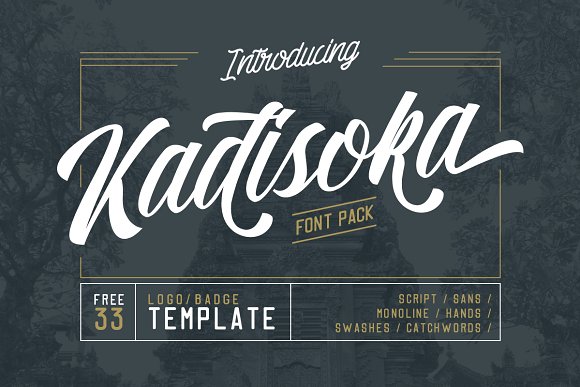
Kadisoka is not a single font but a curated collection of five complementary typefaces. The pack includes Kadisoka Script, Kadisoka Monoline, Kadisoka Sans, Kadisoka Hand, and Kadisoka Swashes. Each variation was developed with a specific application in mind, yet they share enough visual coherence to work together in a unified brand system. This combination of range and consistency is one of the pack's strongest assets. Instead of searching across multiple foundries for fonts that pair well, you get a ready-made ecosystem.
What makes Kadisoka distinct is the level of detail in the main script font. With over 680 unique glyphs and a full set of OpenType features, Kadisoka Script offers the kind of typographic control that designers typically expect from premium standalone script fonts. The inclusion of stylistic alternates, ligatures, and contextual forms means you can tailor the lettering to avoid repetition and achieve a more natural, handcrafted look. This level of polish is not always present in multi-font packs, where the script component can feel secondary to the supporting faces.
Kadisoka Script: The Core Workhorse
Kadisoka Script is the main font file and the most feature-rich component of the pack. Its 680+ glyphs include uppercase and lowercase letters, numerals, punctuation, extended Latin support, and a variety of alternates. The OpenType features allow you to turn standard letter sequences into flowing, connected forms that mimic the rhythm of handwriting while maintaining the precision of a digital font. For projects like wedding invitations, logo marks, or editorial headers, this script provides an elegant and customizable base.
One practical advantage of having so many glyphs is that you can avoid the awkward duplicate look that sometimes occurs in shorter script fonts when the same letter appears multiple times in close proximity. By enabling stylistic sets or manually selecting alternates, you can keep the text feeling organic. However, this level of customization requires some familiarity with OpenType-aware software such as Adobe Illustrator, InDesign, or Affinity Publisher. If you work primarily in basic word processors or web platforms that do not support OpenType features, you may not be able to take full advantage of what Kadisoka Script offers.
Kadisoka Monoline: Clean Consistency for Simpler Contexts
Kadisoka Monoline strips away the complexity of the script and delivers a uniform stroke weight across all characters. With over 180 glyphs, it is more limited in scope than the script version, but that simplicity is exactly what makes it useful. A monoline style works well for subheadings, short captions, or any text where you need a clean, consistent letterform without the decorative flourishes of the full script. It also performs better at smaller sizes, where the delicate thins of a contrast script can become difficult to read.
If your project requires a secondary text element that echoes the feel of the script but does not compete with it, Kadisoka Monoline fills that gap effectively. It is not intended for body copy at small sizes, but it can handle short phrases and labels with ease. When compared to other monoline fonts available as standalone products, this variation offers the advantage of visual harmony with the rest of the Kadisoka family, saving you the trial-and-error of finding a compatible pairing from a different source.
Kadisoka Sans: The Neutral Partner
Kadisoka Sans is described as a neat, complementary typeface, and that description is accurate. In any font pack, the sans-serif companion often determines whether the whole family is practically usable or just decorative. Kadisoka Sans is designed to sit alongside the script and monoline styles, providing a clean, readable option for longer text passages, contact information, or supporting copy. Its proportions and overall character feel contemporary without being overly minimal or cold.
One tradeoff worth considering is that Kadisoka Sans may not have the full range of weights and widths that you would expect from a standalone sans-serif family. If your project demands a robust sans with multiple weights for complex hierarchy, you might need to supplement this pack with another typeface. However, for many branding and design projects that use a script as the primary voice, a single complementary sans weight is often sufficient for headers, tags, and short paragraphs. The key is to match the scope of the project with the scope of the font family.
Kadisoka Hand: Casual and Playful
Kadisoka Hand introduces a more informal, handwritten feel. This variation is less structured than Kadisoka Script and aims for spontaneity rather than elegance. It suits projects where you want to convey approachability, friendliness, or a handmade aesthetic. Think of product packaging for artisanal goods, children's book covers, or casual social media graphics. The handwritten quality adds warmth, but it also imposes limitations. Irregular letterforms can reduce readability in longer strings of text, so Kadisoka Hand is best used sparingly.
When comparing Kadisoka Hand to other handwritten fonts, its strength lies in how it relates to the rest of the pack. Because it shares design DNA with the script and monoline variations, you can mix them within the same piece without causing visual dissonance. A headline in Kadisoka Script followed by a subheading in Kadisoka Hand can create a layered, textural look that feels intentional rather than mismatched.
Kadisoka Swashes: Decorative Accents
Kadisoka Swashes is a collection of ornamental strokes, flourishes, and catchwords. These are not a text font in the traditional sense but a set of decorative elements you can use to enhance typography. Swashes can frame a name, underline a heading, or fill space with graceful curves. This variation is especially useful for logotypes, monograms, and certificate designs.
The decision to include a dedicated swashes font is one of the pack's biggest differentiators. Many script fonts include a handful of swash alternates within the main font file, but having a separate font dedicated to extended flourishes gives you more control and variety. You are not limited to the few options baked into the script; you can layer, scale, and position these decorative elements independently. For designers who frequently work on ornate or formal projects, this can be a significant time-saver and source of inspiration.
Strengths and Tradeoffs of the Kadisoka Pack
The primary strength of the Kadisoka font pack is its cohesion. Each variation supports the others, allowing you to build a consistent visual language without piecing together fonts from different sources. The script variation, in particular, offers a level of OpenType sophistication that competes well with premium standalone fonts. For a designer who values efficiency and wants a usable system out of the box, this pack reduces friction in the early stages of a project.
The main tradeoff involves depth versus breadth. Kadisoka covers five distinct styles, but each style is not as deep as a dedicated font family would be. The sans-serif has a limited weight range, the monoline is best for short text, and the handwritten style works only in specific contexts. If your workflow demands exhaustive typographic control across all categories, you may find the pack more useful as a starting point than as a complete solution. It is also worth noting that the advanced features of Kadisoka Script require OpenType support, so users working on platforms without that capability will not experience the full functionality.
Another consideration is the price relative to individual fonts. Premium script fonts can cost as much as a full multi-font pack, so Kadisoka offers good value if you need all five styles. But if you only need one of them, purchasing the entire pack may not be the most economical route. Evaluate whether the set as a whole serves your current project or your broader font library.
When Kadisoka Is the Right Choice
Kadisoka fits best in projects where a script or handcrafted aesthetic is the primary voice and where you need supporting styles that do not feel mismatched. Branding for boutique businesses, wedding stationery, beauty and lifestyle blogs, artisan product labels, and event invitations are all natural applications. The swashes and catchwords add value for clients who appreciate ornamentation. If your work involves creating cohesive brand identities for small to medium-sized businesses, having a ready-made font ecosystem can streamline your process and ensure visual harmony across deliverables.
The pack also suits designers who want to experiment with a script-driven style without committing to a separate purchase for each supporting font. It gives you room to explore different moods within the same family, which can be helpful when presenting multiple mockups to a client.
When You Might Need Another Option
If your project centers on long-form reading, such as body text for a magazine, book, or extensive website content, Kadisoka is not the ideal choice. The script and handwritten styles are not designed for readability at small sizes over long passages, and the sans-serif companion, while clean, lacks the weight and width variations needed for complex text hierarchies. For editorial or long-form applications, a dedicated text typeface with multiple weights and excellent screen rendering would serve you better.
Similarly, if you need a single versatile sans-serif that can carry a project on its own, Kadisoka Sans may feel too limited. In that case, a full-featured sans family would offer more flexibility. The same applies if you work in an environment where OpenType features are not available; the main script font loses much of its value without the ability to access alternates and ligatures.
Making Your Decision
Choosing the right font pack comes down to matching the tool to the task. Kadisoka offers a well-integrated set of five variations that work together visually and provide a range of expressive options. Its strengths are in branding, decorative design, and projects where a script or handcrafted style takes center stage. Its limitations lie in the depth of each individual style and the need for OpenType support to unlock the full potential of the script.
Before purchasing, consider the specific requirements of your next project or your ongoing design needs. If the pack covers the majority of your use cases, it can save you time and reduce the friction of piecing together compatible fonts. If you need heavy editorial versatility or a standalone workhorse for long-form text, you may want to supplement Kadisoka with additional typefaces. Understanding these tradeoffs allows you to make an informed choice rather than relying on hype or incomplete information.