Going Slow Brings Intentionality Back to Design
There is something quietly rebellious about a font that asks you to pause. In a world of instant notifications, rapid scrolling, and endless content churn, Going Slow feels like an invitation to breathe. Created by Creativeqube, this handcrafted typeface doesn’t scream for attention—it earns it through warmth, texture, and a deliberately unhurried rhythm. Whether you are designing a brand identity, building a personal project, or simply exploring typography for inspiration, Going Slow offers something rare: a visual voice that feels human.
What Going Slow Actually Is
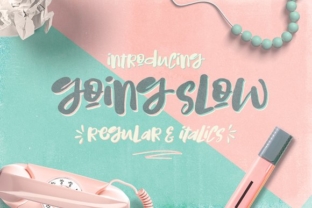
Going Slow is a hand-drawn, handcrafted font that carries the imperfections of real pen strokes. Unlike mass-produced digital typefaces that feel sterile and uniform, this one retains slight irregularities—subtle variations in stroke thickness, gentle wobbles along curves, and organic spacing that mimics natural handwriting. It is not a script font in the traditional cursive sense, nor does it pretend to be a formal serif. It lands somewhere in between: a display typeface that feels personal, almost like a letter written by hand but with enough structure to remain readable.
Creativeqube designed it with warmth and authenticity in mind. The letterforms are rounded without being childish, soft without being weak. Each character carries a tactile quality that makes you want to reach out and touch the page. That physicality is exactly what makes Going Slow stand out in a sea of digital sameness.
Where Going Slow Feels Most at Home
The real magic of Going Slow reveals itself in context. It is not a font you would use for a dense legal document or a corporate annual report—nor should you. Its superpower lies in emotional resonance, not efficiency. Here are some of the most natural environments where this typeface shines.
Small Business Branding with a Local Soul
Imagine a coffee shop that roasts its own beans, sources pastries from a nearby bakery, and knows regular customers by name. The sign above the door, the menu chalkboard, the tag on each bag of beans—all of these touchpoints benefit from a typeface that feels handmade. Going Slow gives that business a visual identity that matches its ethos. It says, “We take our time, and we care about the details.”
The same applies to boutique clothing stores, artisan bakeries, florists, pottery studios, and bookshops that prioritize curation over volume. When your brand is built on craft, your typeface should reflect the same values. Going Slow becomes an extension of the maker’s hand.
Personal Blogs and Storytelling Projects
If you run a personal website, a newsletter, or a Substack, you know that tone matters as much as content. A clean sans-serif works for utility, but it rarely conveys personality. Going Slow, used sparingly for headings or pull quotes, immediately signals that this is a space where someone is sharing from experience, not just broadcasting information. It feels like sitting across the table from the writer, hearing them speak rather than reading a screen.
Travel journals, food diaries, reflective essays, and letters to the reader—these are formats where Going Slow transforms text into atmosphere. Readers may not consciously notice the typeface, but they will feel its warmth.
Wedding Stationery and Event Materials
Weddings, anniversaries, milestone birthdays, and retreats all demand a certain emotional register. Invitations, place cards, programs, and thank-you notes that use Going Slow carry an intimate, handcrafted feel. It works beautifully for couples who want their celebration to feel personal rather than produced. Pair it with textured paper stock and a muted color palette, and every piece of stationery becomes a keepsake.
Creativeqube’s design already carries a gentle timelessness that avoids trendy overdesign. That makes it a safe bet for events where you want elegance without stiffness.
Social Media Graphics That Stop the Scroll
Platforms like Instagram, Pinterest, and TikTok reward content that feels authentic. Overproduced graphics often get ignored, while raw, handmade aesthetics tend to resonate. Going Slow works well for quote cards, mood boards, product announcements, and behind-the-scenes posts. Because it is not a generic system font, it gives your content a distinctive visual signature. Followers start to associate that look with your voice.
For content creators, course sellers, and coaches, this kind of recognizable aesthetic is gold. It makes your brand feel like a person, not a faceless account.
Different Users, Different Ways of Going Slow
The beauty of a handcrafted font like this is that it adapts to the user’s intent. A graphic designer will approach it differently than a small business owner or a hobbyist. Here is how various people might put Going Slow to work.
Freelance Designers Seeking Distinctiveness
If you are a designer building portfolios for clients in lifestyle, wellness, food, or hospitality, you know that standing out requires more than technical skill. Clients want work that feels original. Going Slow gives you a tool that is not in everyone else’s font library. You can use it to create logotypes, packaging mockups, or editorial layouts that carry a signature warmth. It also pairs well with minimalist sans-serifs for contrast—soft headlines against clean body text.
Entrepreneurs Building a Brand from Scratch
Starting a business means making dozens of decisions with limited time and budget. Choosing a font might seem minor, but it shapes first impressions. Going Slow helps entrepreneurs communicate care and authenticity without needing a custom lettering artist. It is a ready-made solution that still feels bespoke. For product packaging, website hero sections, or email headers, it creates a cohesive visual identity quickly.
Writers and Publishers Exploring Print
Small press books, zines, poetry chapbooks, and self-published works benefit from typefaces that carry texture. Going Slow is especially effective for cover text, chapter openers, and section titles. It breaks the visual monotony of long-form reading and adds a tactile quality that invites handling. Readers of physical books often respond to design as much as content, and a thoughtful typeface choice can elevate a project from amateur to artisanal.
Practical Observations from Using Going Slow
Having worked with this font across several projects, a few patterns emerge worth noting. First, it works best at medium to large sizes. Below 14 points, the organic strokes can lose definition, especially on screens with lower resolution. For body text, stick to cleaner companions. For headlines, quotes, and short blocks, Going Slow delivers maximum impact.
Second, spacing matters. Because the letterforms are hand-drawn, they do not conform to rigid metrics. You may need to manually adjust kerning in some design software, especially with certain letter pairs. This is not a flaw—it is part of the handmade character. But it does mean you should budget a few extra minutes for fine-tuning.
Third, consider your medium. On paper, Going Slow looks gorgeous. On high-resolution screens, it also performs well. But on low-end displays or small mobile screens, some of the subtle details may blur. If your primary audience reads on phones, test the font at actual display size before committing.
Strengths and Limitations to Keep in Mind
Going Slow excels at creating emotional connection. Its strength is not versatility but personality. If your project needs to feel human, warm, and intentional, this font does that better than most. It also stands out in a marketplace flooded with geometric sans-serifs and cold modern typefaces. Choosing Going Slow is a statement in itself.
That said, it is not a workhorse font. You cannot use it for long paragraphs, complex data tables, or multilingual documents with extensive diacritics. Its charm comes from imperfection, and imperfection has limits. For corporate websites, legal materials, or any context requiring neutrality, look elsewhere. The key is knowing when Going Slow serves your message and when it distracts from it.
Another consideration is licensing. Always check the specific terms from Creativeqube for commercial use. Some handcrafted fonts have restrictions on embedding in apps or using in merchandise. A quick read of the license saves headaches later.
Final Thoughts on Going Slow as a Creative Tool
Typography is often invisible when done well, but every once in a while, a font demands to be noticed. Going Slow earns that attention not through novelty but through sincerity. It reminds us that not everything needs to be fast, efficient, or optimized. Some things are better when they take time—when they show the hand that made them.
For designers, entrepreneurs, writers, and creatives who value authenticity over polish, Going Slow by Creativeqube offers a way to bring that philosophy into your work. Use it where it matters, pair it thoughtfully, and let it do what it does best: help you slow down and mean what you say.