Gorski and the Art of Handwritten Typography in Contemporary Design
The Enduring Allure of the Handwritten Letterform
There is something deeply resonant about a handwritten letter. In an age dominated by clean sans-serif interfaces and mechanically precise digital type, the irregular stroke, the slight wobble of a line, and the intimate imperfection of script evoke a warmth that no Helvetica can replicate. Gorski occupies a unique space in this landscape: it is a delicate handwritten font that channels the energy of vintage comic book lettering without sacrificing legibility or modern usability. Understanding where Gorski fits within the broader typographic ecosystem helps designers, hobbyists, and business owners make informed choices about when script fonts genuinely serve a project rather than merely decorate it.
What Defines a Delicate Handwritten Font Like Gorski?
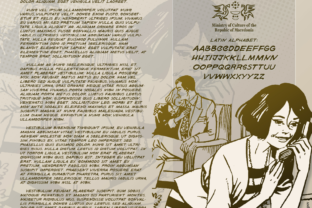
Not every script font carries the same weight, and that distinction matters. Gorski belongs to a category best described as illustrative handwriting—letterforms that feel drawn rather than written with a continuous motion. The strokes exhibit subtle variation in thickness, mimicking the pressure sensitivity of a nib or a fine brush, while the overall character set retains a consistent personality across uppercase, lowercase, and punctuation. What sets Gorski apart from bolder, more casual comic book fonts is its delicacy. The stems are lighter, the curves more refined, and the overall impression leans toward nostalgic elegance rather than crude whimsy.
For designers searching for a font that brings a fun vintage feel without overwhelming a layout, Gorski strikes a careful balance. It acknowledges its comic book lineage without becoming a parody of itself. The letterforms carry the bounce and irregularity of hand-drawn type but remain disciplined enough for extended reading in small sizes. This dual nature makes it a versatile tool in the right hands.
Branding and Small Business Signage
Small business owners often struggle with typography choices that differentiate them from corporate competitors. A delicate handwritten font like Gorski works exceptionally well for boutique storefronts, artisan coffee shops, vintage clothing brands, and craft-based businesses. The font communicates authenticity and craft. A bakery using Gorski for its logo and menu boards signals that the product inside has been made with care, not mass-produced. The comic book influence adds a slight playfulness that appeals to younger demographics while the vintage touch resonates with older customers seeking nostalgia.
- Cafés and bakeries benefit from Gorski on chalkboard-style signage and packaging labels.
- Handmade product sellers use it for soap labels, candle jars, and artisan food packaging.
- Event planners incorporate Gorski into invitations for weddings, garden parties, and retro-themed gatherings.
Editorial and Content Design
Publishers and content creators searching for display typography with personality often turn to script fonts for pull quotes, chapter headings, and accent elements. Gorski performs especially well here because its delicate strokes do not compete with body text. A magazine feature on mid-century design, for example, might pair a clean serif body face with Gorski for drop caps and section headers. The contrast creates visual rhythm while the vintage comic undertone reinforces a nostalgic editorial theme without forcing the reader into a literal comic book experience.
Educational and Instructional Materials
Educators and researchers might overlook typography as a pedagogical tool, but font choice influences learner engagement. Gorski appears in classroom posters, workshop handouts, and children's activity sheets where a friendly, approachable tone supports comprehension. The comic book heritage makes it particularly effective for materials aimed at younger learners or for subjects that benefit from a less formal framing, such as creative writing prompts or art history timelines. The delicacy of the font prevents it from feeling childish, so it can bridge the gap between playful and informative.
Pairing and Contrast
A delicate handwritten font demands thoughtful pairing. Gorski lacks the heavy weight and bold presence of slab serifs or geometric sans-serifs, so it needs companions that respect its subtlety. A neutral sans-serif like a light or regular weight of Open Sans, Lato, or Montserrat creates enough contrast without overpowering the script. Alternatively, a thin serif with low contrast—something like EB Garamond or Cormorant—can echo the vintage tone while providing structural stability.
- Body text: Stick to clean, neutral fonts with moderate x-heights.
- Accent elements: Let Gorski stand alone rather than mixing multiple script faces.
- Color treatment: Gorski renders beautifully in muted tones—dusty rose, olive, navy, and charcoal—that amplify its vintage feel.
Size and Legibility Thresholds
One practical consideration with any delicate handwritten font is the minimum size at which it remains readable. Gorski performs best at display sizes—typically 18 points and above for print, or roughly 24 pixels and above for digital. Below those thresholds, the fine strokes begin to blur, and the charming irregularities become obstacles. Designers should reserve Gorski for headings, short phrases, and emphasized elements rather than paragraphs. When used in logotypes or badges, the font retains clarity even at smaller dimensions provided the output medium has sufficient resolution.
File Formats and Implementation
Most commercial versions of Gorski come in OpenType format with standard ligatures and alternate characters. Designers working in web environments should check for webfont licensing and ensure the font file includes the character set needed for their target languages. The delicate nature of the strokes means that rendering on low-resolution screens or certain operating systems may introduce artifacts, so testing across devices remains essential before committing to a web implementation.
Workflow Integration for Designers and Creatives
Incorporating Gorski into a real design workflow requires more than installing a font and typing. The comic book handwritten style works best when the surrounding layout supports an organic, slightly asymmetrical feel. Grid systems can still apply, but rigid alignment often clashes with the font's natural rhythm. Designers who use Gorski for logo work frequently pair it with hand-drawn icons, textured backgrounds, or distressed paper effects to complete the vintage aesthetic.
For digital projects, subtle treatments like a slight rotation on text blocks, uneven letter spacing, or layered shadows can extend the handcrafted impression. However, restraint matters. Over-styling Gorski with excessive effects—drop shadows, outlines, gradients—dilutes its delicate character and risks veering into amateur territory. Let the font breathe. White space around Gorski elements highlights the stroke nuances that make the font distinctive in the first place.
The Emotional and Psychological Impact of Handwritten Type
Typography communicates before a single word is read. The choice of Gorski signals to an audience that the message carries personal attention, warmth, and a respect for craft. Research in design psychology consistently shows that handwritten fonts increase perceived sincerity and emotional engagement compared to mechanical typefaces. For businesses and creators aiming to build trust, especially in markets saturated with polished corporate branding, a delicate handwritten font offers differentiation grounded in human connection.
The vintage comic book association adds another layer. Comic book lettering historically conveyed energy, urgency, and personality—often within limited color palettes and constrained print technologies. Gorski channels that heritage but adapts it for contemporary contexts where nostalgia functions as a design asset. Readers encountering Gorski in a branding context may not consciously identify the comic book influence, but they experience the familiarity and comfort associated with hand-drawn visual culture.
Comparing Gorski to Other Handwritten and Script Fonts
The market for script fonts is vast, ranging from formal calligraphy faces to rough marker styles. Gorski occupies a middle ground. Unlike cursive scripts that simulate continuous handwriting, Gorski retains the discrete, constructed quality of individual letterforms typical of comic book lettering. This makes it more legible in short bursts than highly connected scripts while maintaining more personality than simple sans-serif handwriting fonts.
Compared to heavier comic-style fonts like Komika or ChunkFive, Gorski is deliberately restrained. It does not shout. It whispers with a vintage accent. Designers choosing between them should consider the emotional tone of the project. Loud, energetic branding might call for a bolder comic font, while anything requiring subtle charm, nostalgia, or approachability benefits from Gorski's lighter touch.
Trends Shaping the Use of Handwritten Fonts in 2025 and Beyond
The broader design industry continues to move away from sterile minimalism toward expressive, human-centered typography. Handwritten fonts, and delicate faces like Gorski in particular, align with this shift. Brands increasingly seek authenticity through imperfection. The slight irregularities and organic feel of a font like Gorski resist the algorithmic sameness that dominates much of digital design.
Additionally, the resurgence of interest in vintage print aesthetics, independent publishing, and handcrafted visual identity has created sustained demand for typefaces that reference historical periods without replicating them exactly. Gorski fits this trend by evoking mid-century comic books and vintage signage while remaining fully functional in modern responsive layouts and print-on-demand workflows. For educators, researchers, and hobbyists exploring typography as a craft rather than a utility, fonts like Gorski provide accessible entry points into discussions about letterform history, visual communication, and the emotional dimensions of type.
Practical Observations from Real Deployment
Designers who have used Gorski in commercial projects often note a specific pattern: the font works best when the surrounding design aesthetic leans tactile. Projects involving textured papers, rough edges, muted color palettes, and natural materials see the highest success. Digital-first projects requiring fast loading times and clean interfaces need more careful integration, but short hero headlines and branded social graphics benefit from Gorski's distinctive voice.
One common observation is that Gorski pairs unexpectedly well with monospaced fonts. The contrast between the delicate handwritten script and the rigid uniformity of a monospace creates a tension that feels modern without losing the vintage anchor. This combination appears increasingly in tech-adjacent branding where companies want to signal both creativity and precision.
Final Thoughts on Choosing and Using Gorski
Typography decisions are rarely neutral. Every font carries cultural associations, visual weight, and emotional resonance. Gorski offers designers, business owners, educators, and hobbyists a tool that is at once specific and versatile. It is not a font for every project, but when the brief calls for warmth, nostalgia, approachability, and a touch of comic book energy, Gorski delivers what clean typefaces cannot. Understanding its strengths, pairing it with complementary fonts, respecting its size limitations, and letting its delicate character lead rather than follow the layout ensures that the final design feels intentional rather than decorative.
Whether used on a coffee bag label, a children's workshop poster, or a boutique brand identity, Gorski reminds us that handwriting—even in digital form—retains the power to connect. The fun vintage feel is not merely an aesthetic bonus; it is the very quality that makes design feel human again.