Batllo: The Art Nouveau Script Font Inspired by Gaudí's Casa Batlló
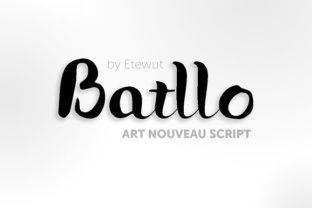
Typography has a quiet power. It shapes how we read, feel, and remember. Most fonts are designed to be invisible—functional tools that carry words without drawing attention. But every so often, a typeface arrives that refuses to blend in. Batllo is one of those fonts. Created by designer Etewut, Batllo is an Art Nouveau script font that draws direct inspiration from the architectural genius of Antoni Gaudí and, more specifically, from Casa Batlló, one of Barcelona's most visited Gaudí museums. This is not a font that merely looks decorative. It carries a philosophy, a backstory, and a distinct personality that sets it apart from anything else in the script font category.
What Is Batllo? A Font Born from Architecture
Batllo—often stylized as Battllo on some platforms—is not your average script typeface. It belongs to the Art Nouveau tradition, a movement known for its organic lines, floral motifs, and rejection of rigid geometric forms. Gaudí's work is the pinnacle of that tradition, and Casa Batlló is one of its most celebrated expressions. When Etewut visited Casa Batlló, something clicked. Almost every surface inside the building is designed to evoke natural forms from Catalonia: animals, bones, plants, and flowing water. The staircase resembles a dragon's spine. The ceiling suggests a sea turtle's shell. The windows are like the ribcage of some ancient creature.
From that immersion came Batllo. But this is not a font that simply copies architectural shapes. Instead, it translates Gaudí's organic principles into letterforms. Each glyph feels hand-drawn, almost living. The curves are not mechanical; they breathe. The ascenders and descenders carry a subtle tension, as if they might move if you looked away long enough.
The Philosophy Behind the Letters: "There Is No Wrong, Only a Proper Place"
One of the most compelling aspects of Batllo is the philosophical foundation Etewut brought back from Casa Batlló. As the designer understood it, Gaudí's approach to architecture was guided by a simple yet profound idea: there is no wrong, only a proper place. In Casa Batlló, nothing is arbitrary. A bone-shaped column isn't there for shock value—it supports a specific weight at a specific angle. A wave-like ceiling isn't a decorative flourish—it channels light and sound in a particular way.
Batllo applies this same logic to typography. Every letter is unique. Not in a chaotic, random way, but in a purposeful, context-aware manner. The lowercase a might flow differently than the b, not because the designer couldn't make them match, but because each character occupies its own "proper place" in the visual ecosystem of the font. This means that Batllo feels cohesive without being uniform. It has rhythm without repetition. For designers and creators who are tired of sterile, grid-based fonts, this is a refreshing shift.
Key Features and Characteristics of Batllo
Let's get into the practical details. What does Batllo actually look and feel like, and what can you expect when you use it?
- Art Nouveau-inspired letterforms: Batllo carries the hallmark curves, swashes, and organic flow of the Art Nouveau period. It's elegant but not stiff, ornate but not illegible.
- Unique glyphs with no exact repeats: Following the "proper place" philosophy, each character has its own subtle variation. This makes Batllo ideal for projects that need a handcrafted, authentic feel.
- Script style with personality: It's a connected script in spirit, though some letters stand independently. The overall impression is that of a skilled calligrapher who has developed a personal style over years.
- Inspired by natural forms from Catalonia: The curves mimic plant stems, animal spines, and flowing water. This gives the font a grounded, organic quality that connects it to the natural world.
- High contrast and expressive strokes: Thick and thin transitions are dramatic, creating a sense of movement and depth. This is not a font for body text—it's a display face meant to command attention.
Who Can Benefit from Using Batllo?
Batllo is not a universal workhorse font. It has a strong personality, and that personality is best suited to specific contexts. Here's who might find it most useful:
- Graphic designers and brand identity creators: If you're working on a brand that wants to evoke craftsmanship, heritage, or artistic flair, Batllo can serve as a signature typeface. Think boutique hotels, art galleries, wineries, and luxury handcrafted goods.
- Wedding and event stationery designers: The romantic, flowing nature of Batllo makes it a strong candidate for invitations, place cards, and programs. Its unique glyphs add a bespoke quality that couples often seek.
- Writers and authors with niche projects: Book covers, poetry collections, and limited-edition prints can benefit from Batllo's expressive character. It signals that the content inside is not mass-produced.
- Small business owners with a creative angle: If you run a business that emphasizes artistry—a florist, a custom furniture maker, an artisan bakery—Batllo on your website or packaging can communicate your values at a glance.
- Online content creators and social media users: For headers, logos, and quote graphics, Batllo adds visual interest that standard fonts cannot match. It helps content stand out in crowded feeds.
Where to Use Batllo: Practical Scenarios and Applications
Understanding where a font works best is as important as knowing its features. Here are some real-world scenarios where Batllo shines—and a few where it might not be the best choice.
Ideal Use Cases
- Branding for hospitality and tourism: Imagine a boutique hotel in Barcelona or a vineyard in Catalonia. Batllo on the logo, menu, and signage immediately communicates a connection to local heritage and artistry. It feels authentic, not manufactured.
- Product packaging for premium goods: Chocolate boxes, perfume bottles, and artisanal olive oil labels benefit from the tactile, handcrafted feel of Batllo. It suggests that every detail has been considered.
- Art prints and posters: For gallery announcements, exhibition catalogs, or limited-edition prints, Batllo adds an artistic layer that complements the work being displayed.
- Invitations and stationery: Wedding invitations, save-the-dates, and thank-you cards become more memorable when set in a font that feels personal and expressive. Batllo's unique glyphs make each piece feel one-of-a-kind.
- Social media headers and branding: YouTube channel headers, Instagram story titles, and blog banners can use Batllo to create a consistent, recognizable visual identity.
Where to Approach with Caution
Batllo is a display font, not a text font. Using it for long paragraphs, dense body copy, or small sizes will quickly lead to readability issues. The dramatic contrast and unique glyphs that make it beautiful at large sizes become distracting at 12pt. Similarly, it may not suit corporate or highly formal contexts—unless the brand specifically leans into artistic expression. For legal documents, financial reports, or minimalist brands, Batllo would feel out of place.
Strengths and Considerations When Using Batllo
Every font comes with trade-offs. Here's an honest look at what Batllo does well and what you should keep in mind.
Strengths
- Unforgettable visual impact: Batllo stops the eye. In a world of Helvetica and Roboto, it offers something genuinely different.
- Philosophical depth: The story behind the font—the Gaudí inspiration, the "proper place" concept—adds a layer of meaning that resonates with discerning clients and audiences.
- Handcrafted authenticity: In an era of AI-generated design, a font that feels human-made is increasingly valuable. Batllo carries the warmth of a hand-drawn script.
- Versatility within its niche: While it's not a general-purpose font, within its niche (display, branding, artistic work), it performs exceptionally well.
Considerations and Limitations
- Not suitable for small sizes or body text: Plan to use Batllo at 24pt or larger. Below that, details begin to blur, and readability suffers.
- Limited language support: Depending on the version you acquire, Batllo may not cover extended Latin or non-Latin scripts. Always check the glyph set before committing to a multilingual project.
- Strong personality can dominate: Batllo is not a neutral font. It imposes its character on any project. If the content or brand is already visually loud, adding Batllo might create clutter rather than harmony.
- Licensing and availability: As a specialty font from a specific designer, Batllo may not be included in standard font subscriptions. You'll likely need to purchase a license directly. Budget accordingly.
How to Evaluate Whether Batllo Is Right for Your Project
Choosing a font is a decision about tone, audience, and context. Here's a practical framework to help you decide if Batllo fits your needs.
- Define the emotional goal: What feeling should the typography evoke? If the answer includes words like "artistic," "heritage," "romantic," or "handcrafted," Batllo is a strong candidate. If the goal is "clean," "professional," or "corporate," look elsewhere.
- Consider the medium: Will the font be used primarily in print or on screen? For print, Batllo's fine details and swashes will reproduce beautifully on quality paper. On screen, test it at various sizes to ensure legibility on different devices.
- Audience expectations: Who will see the final product? A design-savvy audience will appreciate Batllo's background and uniqueness. A general audience may simply find it beautiful. But if your audience expects conventional typography, Batllo's distinctiveness might feel jarring.
- Pairing and hierarchy: Batllo works best as a display or accent font. Pair it with a clean, readable sans-serif for body text. This creates contrast and allows Batllo to shine without overwhelming the page.
- Test, then commit: Before purchasing a full license, try to obtain a sample or trial version. Set a few headlines, paragraphs, and logos. See how Batllo interacts with your content and other design elements.
Final Thoughts: Batllo as a Creative Tool, Not a Gimmick
Batllo is not a font you use casually. It demands attention and intentionality. But for the right project, it can elevate the work from ordinary to memorable. The connection to Gaudí's Casa Batlló and the philosophy of "no wrong, only a proper place" gives it a depth that few typefaces can claim. When every glyph is unique, the message feels more personal, more alive.
For designers, business owners, and creators who value authenticity and artistic expression, Batllo offers a way to stand out without compromising on quality. It is a reminder that typography, at its best, is not just about reading—it's about feeling. And in a digital world that often prioritizes speed over soul, a font like Batllo is a small but meaningful act of resistance.
If your next project calls for warmth, heritage, and a touch of Gaudí's magic, Batllo might be exactly the proper place to start.