Elegant Roughness: A Handwritten Font That Balances Polish and Authenticity
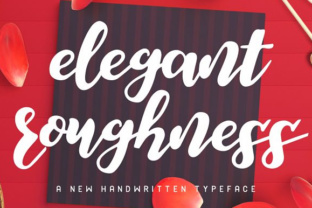
Handwritten fonts occupy a curious space in typography. Many aim for perfect imitation of human lettering, yet few convey the tactile reality of pen meeting paper. Elegant Roughness approaches this problem from a different angle: it does not attempt to hide its handmade origins. Instead, it foregrounds them, offering a script font that feels both deliberate and unpolished. The result is a typeface that works because it refuses to smooth over the process that created it.
This font began as a sketch on paper, revised patiently with a pen, then revised again before being digitized. That iterative process shows in every character. The letterforms carry the weight of someone who cared about each stroke, yet they retain the slight irregularities that make handwriting feel human. For professionals who need a font that communicates warmth without sacrificing legibility, Elegant Roughness offers a practical middle ground.
What Makes Elegant Roughness Distinctive
Most script fonts fall into one of two camps. There are clean, polished scripts that look beautiful but can feel sterile, and there are rough, brush-style fonts that feel authentic but often sacrifice readability. Elegant Roughness tries to occupy both territories at once. It combines the structured flow of a script font with the edge-of-control quality of a brush, creating letterforms that feel intentional but not mechanical.
The roughness is not random. Each character shows controlled variation in stroke width, slight unevenness in curves, and a texture that suggests real ink on real paper. This gives the font a distinctive presence in projects where you want the audience to feel that a human being wrote the words. At the same time, the underlying structure is consistent enough to keep the text readable across longer passages, which is not something every rough script font can claim.
The Journey from Paper to Pixel
Understanding how Elegant Roughness was made helps explain why it works. The font started as a hand-drawn sketch, then went through multiple rounds of revision with a pen. Each character was adjusted, re-drawn, and refined before being digitized. That process preserved the natural variation of handwriting while removing the obvious errors that would make the font unusable.
When the sketch was digitized, the goal was not to perfect the forms but to capture them faithfully. The rough edges, the slight inconsistencies, the variations in pressure—these were kept because they are what make handwriting feel real. The result is a font that reads as authentic without feeling sloppy. For designers and content creators tired of sterile, perfectly uniform scripts, this approach offers a genuine alternative.
Key Characteristics and Design Structure
Elegant Roughness has a clear design language that makes it suitable for a range of uses. The letterforms are connected in a natural cursive flow, but the connections are not forced. Some letters stand slightly apart, which adds to the handwritten feel and prevents the text from becoming a blur of ink.
- Stroke variation – Thick and thin strokes occur naturally, mimicking the pressure changes of a real pen or brush. This gives the font depth and movement.
- Rough edges – Instead of clean, vector-perfect curves, the edges show texture and slight fraying. This is the core of the font’s name and its primary visual characteristic.
- Consistent baseline – Despite the roughness, the baseline remains stable enough to keep the text readable. Characters do not wander or tilt unpredictably.
- Moderate x-height – The font uses a moderately tall x-height, which helps with readability in both short and medium-length applications.
These features make Elegant Roughness versatile without losing its identity. It does not try to be a neutral font, and that is precisely its value.
Practical Applications and Real-World Performance
Elegant Roughness performs best in contexts where the audience needs to feel a human presence. It is not a body text font, but it does not need to be. Its natural role is in display work: headlines, taglines, quotes, logos, and similar short-form applications where the personality of the typeface carries the message.
For entrepreneurs and small business owners, this font can function as a standalone logo element. A brand name set in Elegant Roughness communicates approachability and craftsmanship without needing additional graphic elements. The font does the work of establishing tone on its own. For marketers, it works well in social media graphics, email headers, and short promotional copy where you want the text to feel like a personal note rather than a corporate announcement.
Bloggers and content creators can use it for pull quotes, section headings, or signature-style closing lines. The font adds a layer of personality that standard sans-serif or serif fonts cannot replicate. For educators and freelancers, it works in presentation titles, workshop materials, or client-facing documents where you want to signal that real thought and care went into the work.
Practical Example: A Tagline and a Logo
Consider a small bakery using Elegant Roughness for its tagline: Baked fresh this morning. The roughness of the font conveys the handmade, artisanal quality of the product, while the elegance of the script keeps it from looking messy or unprofessional. The same tagline in a polished script font would feel generic. In a rough brush font, it might feel chaotic. Elegant Roughness finds the balance.
For a solo consultant creating a personal brand, the font can be used in a logo that appears on a website header, business card, and proposal cover page. The handwritten quality signals that the consultant operates with a personal touch, while the underlying structure maintains the professionalism expected by clients. The font is versatile enough to carry this weight across different media without breaking down visually.
Who Benefits Most from Elegant Roughness
Elegant Roughness is not a font for every project, but for the right projects, it is difficult to beat. The professionals who will get the most value from it share certain needs.
- Brand designers working on identity systems for small businesses, artisans, or lifestyle brands will find the font useful for establishing a personal, crafted tone.
- Content creators and bloggers who want their headings and quotes to feel distinctive without relying on elaborate graphics will appreciate the font’s built-in personality.
- Marketers and social media managers who need short copy that reads like a personal message rather than a corporate broadcast will find Elegant Roughness effective for captions, headers, and promotional text.
- Freelancers and consultants building their own brand identity will benefit from a font that communicates individuality without sacrificing the polish that clients expect.
- Educators and workshop leaders who create presentation materials or handouts can use the font to add a human element to otherwise standard slide decks.
The font also works well for serious hobbyists creating invitations, greeting cards, or personal projects where the goal is to produce something that looks intentionally crafted rather than assembled from templates.
Strengths and Considerations for Professional Use
Elegant Roughness has several strengths that make it worth evaluating. The first is its authenticity. In an era where audiences are increasingly sensitive to design that feels generic, a font that clearly originated from a human hand carries weight. The second is its readability. Unlike many rough or brush fonts that sacrifice legibility for texture, Elegant Roughness keeps the letterforms clear enough for their intended use. The third is its visual distinctiveness. It does not look like the default scripts that come bundled with design software, which means it can help a project stand out without trying hard.
There are also practical considerations to keep in mind. The font is not designed for long body copy. Using it for paragraphs of text will tire the reader and dilute the font’s impact. Its strength lies in short, prominent placements where the texture and rhythm of the letterforms can be appreciated. Additionally, the rough edges mean the font performs better at larger sizes. At very small sizes, the roughness can blur or become distracting, especially on screens with lower resolution. Designers should test the font at the intended display size before committing to it.
The font’s consistency is good for a script of this type. The characters flow together naturally, and the spacing feels balanced. However, as with any handwritten font, some letter combinations may require minor kerning adjustments depending on the layout. This is normal for the category and should not be seen as a flaw.
For long-term value, Elegant Roughness holds up well. It is not a trend-driven font. Its aesthetic is grounded in the timeless appeal of handwriting, which means it will not look dated after a few years. For professionals building a brand that needs to last, this is an important consideration.
How Elegant Roughness Compares in the Script Font Landscape
When placed alongside other script fonts, Elegant Roughness occupies a specific niche. It is more structured than raw brush fonts, which makes it easier to use in professional contexts. It is less polished than formal scripts, which makes it more approachable and human. It sits somewhere in the middle, and that position is exactly what many projects need.
Compared to free or default handwritten fonts, Elegant Roughness shows more attention to detail. The characters have been refined through multiple rounds of revision, and that investment shows in the overall quality. The font does not feel like a quick digitization of a single sketch. It feels like the result of a process that valued both the initial hand-drawn character and the final digital execution.
For professionals who have tried other handwritten fonts and found them either too clean to look genuine or too rough to look professional, Elegant Roughness offers a solution that bridges the gap. It acknowledges the roughness without letting it dominate the reading experience.
Final Thoughts on Fit and Value
Elegant Roughness is a font that knows what it is and does not try to be everything. It is not a workhorse typeface for long documents, and it is not a decorative novelty font that only works in specific gimmicky contexts. It is a practical tool for professionals who need to communicate warmth, authenticity, and personality through short-form text. It works because it was made by someone who understood that the rough edges of handwriting are not flaws to be removed, but features to be preserved.
For anyone building a brand, creating content, or producing materials that benefit from a human touch, Elegant Roughness is worth examining. It delivers on the promise of its name: elegance and roughness, together, in a font that feels both intentional and alive.