Favoured and Favoured: Integrating a Handcrafted Font into Your Creative Workflow
Choosing the right typeface is rarely a standalone decision. It sits at the intersection of aesthetics, legibility, and the practical demands of a project. Favoured, a handcrafted font created by Creativeqube, offers something distinct in a landscape crowded with utilitarian typefaces. But understanding what it is, and more importantly, where it fits in a real workflow, makes the difference between a font that simply looks good and one that elevates an entire project.
This article walks through what Favoured is, how it behaves in different phases of work, and how you can integrate it smoothly into your own processes—whether you are designing a brand identity, producing content, or managing a team's output.
What Favoured Is and Where It Belongs
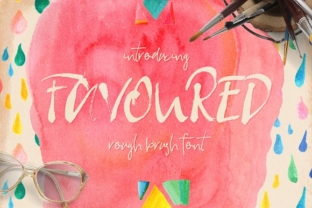
Favoured is a handcrafted display font. That means every letterform carries the subtle irregularities, organic curves, and human touch that come from being drawn by hand rather than generated by algorithm. Creativeqube has built it to sit comfortably in projects that need warmth, personality, or a bespoke feel without sacrificing readability.
Its natural home is in headlines, logos, social media graphics, product packaging, invitations, and any visual context where you want the text to carry emotional weight. That said, it is not a body text font for long paragraphs. Understanding this distinction early prevents misalignment later in a project.
Before the Project: Planning with Favoured in Mind
The most effective use of any font begins before you open a design tool. When you are in the planning phase—defining the tone, audience, and deliverables—ask yourself whether a handcrafted aesthetic supports the message.
Favoured works well when you need to communicate approachability, craftsmanship, or a sense of care. If your project involves a wedding invitation, a boutique brand, a creative agency's website, or a product launch aimed at a design-conscious audience, this font can become a core visual anchor.
During planning, also consider the broader asset pipeline. Will Favoured need to pair with a complementary sans-serif for body text? Will it appear on digital screens, printed materials, or both? Answering these questions before you start designing saves time and prevents rework.
Pairing Favoured with Other Typefaces
Because Favoured carries a strong personality, it pairs best with neutral, clean typefaces that do not compete for attention. Consider using a minimal sans-serif like Open Sans, Lato, or Montserrat for supporting text. This contrast allows Favoured to lead the visual hierarchy while the secondary font handles navigation, captions, or longer reading passages.
If you are working within a brand system, test the pairing across multiple mockups early. A quick sketch of a homepage header, a business card, and a social media post can reveal whether the combination holds up across contexts.
During the Project: Practical Implementation of Favoured
Once planning is complete, the implementation phase is where most decisions about sizing, spacing, and color happen. Favoured, like any handcrafted font, benefits from attention to detail in these areas.
Sizing and Hierarchy
Because handcrafted fonts often have more visual weight than geometric typefaces, they tend to perform best at larger sizes. Use Favoured for primary headlines, section titles, and pull quotes. Avoid shrinking it down for subheadings or body copy, where its organic details may become muddy or hard to read.
A good rule of thumb is to use Favoured at 24 points or larger for digital work, and at 18 points or larger for print, depending on the medium. Test actual output before committing.
Spacing and Kerning
Hand-drawn fonts sometimes require manual kerning adjustments because the spacing between letter pairs can feel uneven. When you import Favoured into your design software, spend a few minutes checking the kerning for your specific word combinations—especially in logos or short headlines where every detail matters.
Some design tools like Adobe Illustrator, Affinity Designer, or Figma allow you to adjust letter spacing per pair. This level of polish distinguishes work that feels professional from work that feels merely passable.
Color and Background
Favoured works well on both light and dark backgrounds, but the effect differs. On a clean white or light background, the handcrafted lines stand out clearly, giving a crisp, modern feel. On a dark background, the font can feel warmer and more intimate, especially when paired with a muted accent color.
If you plan to place Favoured over images, ensure sufficient contrast. A subtle drop shadow or a semi-transparent overlay can help maintain legibility without dulling the visual impact.
After the Project: Quality Control and Consistency
Once the design work is done, the font continues to play a role in quality control and long-term consistency. This phase is often overlooked, but it is where many projects lose cohesion.
Reviewing Output Across Mediums
If your project uses Favoured in both digital and print formats, check how it renders in each. Handcrafted fonts can sometimes lose detail when rasterized for screens or when printed at small sizes on certain paper stocks. Request a physical proof if possible, or test on multiple devices before finalizing.
Pay attention to how the font behaves in different file formats, especially if you are handing off assets to a developer or a printer. Providing the font file along with usage guidelines prevents inconsistencies downstream.
Documenting Usage Guidelines
If you work in a team or plan to reuse Favoured across multiple projects, create a short style guide. Include the font name, the correct file format (OTF or TTF), the recommended size ranges, approved color palettes, and pairing fonts. This documentation ensures that anyone who touches the project later can maintain the same level of quality.
For freelancers and small business owners, this might feel like extra work, but it pays off the moment you revisit a project six months later and need to produce a new asset.
Integrating Favoured with Other Tools and Platforms
Favoured is a font file, but its value multiplies when you integrate it into the tools and platforms you already use. Here are practical ways to do that without friction.
Design Software
Favoured works in all major design applications—Adobe Creative Suite, Affinity products, Canva, Figma, Sketch, and even Procreate for iPad. Install the font on your system and it will appear in the font menu of any compatible app. If you are using web-based tools like Canva, upload the font file to your account if the platform supports custom uploads.
Web and Development Workflows
For web projects, Favoured can be used as a custom web font. You will need to include the font files in your project folder and reference them via @font-face in your CSS. Alternatively, check whether Creativeqube offers a web font version or a license that covers web embedding. Always review the licensing terms before deploying a font online.
If you are working with a developer, provide the font files along with fallback fonts in case the custom font fails to load. A reasonable fallback stack for Favoured might include a serif like Georgia or a decorative font that approximates its weight and style.
Content Management Systems
Bloggers, educators, and small business owners who use WordPress, Squarespace, or Wix can often upload custom fonts directly through the theme customizer or via a plugin. Once installed, you can apply Favoured to headings across your site, giving your content a consistent and distinctive look.
For email marketing platforms like Mailchimp or ConvertKit, embedding Favoured is more limited because many email clients do not support custom fonts reliably. In those cases, use Favoured for the header image and fall back to a web-safe font for the body text.
Workflow Examples: Favoured in Action
To see how this all comes together, here are a few concrete scenarios where Favoured fits naturally into a workflow.
Scenario 1: A Freelance Designer Branding a Lifestyle Business
You are designing a brand identity for a small organic skincare line. During the planning phase, you decide that a handcrafted font will communicate the handmade, natural quality of the products. You choose Favoured for the logo and product labels. During implementation, you pair it with Lato for ingredient lists and website body copy. After launch, you provide the client with a style guide that includes Favoured, along with approved colors and pairing fonts, so they can maintain consistency when creating social media content.
Scenario 2: A Blogger Creating a Personal Brand
You run a blog about slow living and minimalism. You want the site to feel personal but polished. In the planning phase, you select Favoured for your blog title and post headings. During implementation, you upload the font to your WordPress theme and test it across desktop and mobile. You notice that at smaller heading sizes, the font loses some legibility, so you increase the minimum heading size. For body text, you use a clean sans-serif. Over time, readers begin to associate the warm, handcrafted headings with your brand's voice.
Scenario 3: A Marketing Team Launching a Product
Your team is preparing a product launch for a premium subscription box. The creative lead chooses Favoured for the launch page headlines and email hero images. During implementation, the designer pairs it with Montserrat for body text and creates a set of reusable templates in Figma. The developer embeds the font on the landing page with proper fallbacks. After launch, the team uses the same templates for social media and follow-up emails, keeping the visual identity consistent across channels.
Long-Term Use and Maintenance
Fonts are assets, and like any asset, they benefit from thoughtful management. If you use Favoured across multiple projects, keep the font file organized in a central location—a cloud drive, a team asset library, or a design system folder. Regularly check that you are using the latest version provided by Creativeqube, especially if updates include additional glyphs, improved kerning, or expanded language support.
For professionals who manage multiple clients or brands, maintaining a font inventory helps avoid licensing issues and ensures that each project uses the correct files. A simple spreadsheet or a tool like FontBase can track where each font is used and what license applies.
Final Observations on Using Favoured
Favoured from Creativeqube is not a font you use by accident. It is a deliberate choice that signals care, personality, and a human touch. When integrated thoughtfully into a workflow—from planning through implementation to long-term maintenance—it becomes more than a stylistic flourish. It becomes a reliable tool that supports your message and strengthens your visual identity.
The best results come when you treat Favoured as part of a system rather than a standalone decoration. Pair it wisely, test it thoroughly, document your decisions, and let it do what handcrafted type does best: make people feel something.