Fontmageddon: A Practical Evaluation of Jeff Bensch's Hand-Made Typeface
When browsing typefaces for a design project, it is easy to gravitate toward polished, mathematically precise fonts. Yet there is a growing appreciation for typefaces that embrace imperfection, character, and human touch. Fontmageddon, a hand-made font created by designer Jeff Bensch, sits squarely in this category. Rather than offering sterile uniformity, it presents a raw, hand-drawn aesthetic that can either elevate a project or clash with its intent. This article evaluates Fontmageddon objectively, examining its strengths, limitations, and the considerations that matter most when deciding whether it fits your needs.
What Is Fontmageddon?
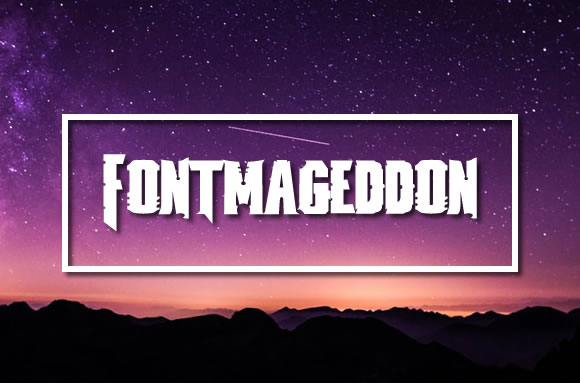
Fontmageddon is a display typeface designed entirely by hand. Jeff Bensch created it with an evident focus on irregularity, texture, and organic form. The letterforms are not constructed from smooth vectors but from strokes that mimic real pen or brush marks. This gives the font a tactile quality that many digital typefaces lack. It is not a neutral workhorse font; it is a stylistic choice intended for contexts where personality and visual impact take priority over readability in large blocks of text.
The font includes uppercase and lowercase characters, numerals, and basic punctuation. Its irregular baseline and varying stroke widths mean each character has a unique footprint. This variation is deliberate and central to its appeal. However, because it is hand-made, the set does not include multiple weights, italics, or extensive language support. Understanding these boundaries is important before committing to it for a project.
Why Consider Fontmageddon?
There are several reasons a designer, marketer, or hobbyist might be drawn to Fontmageddon. The most obvious is its visual distinctiveness. In a landscape where many projects look similar due to widespread use of the same popular fonts, a hand-made typeface offers a way to stand out. Fontmageddon communicates effort, authenticity, and a human-centered approach.
Another reason is its suitability for specific genres. Projects related to horror, punk, underground music, dystopian themes, or gritty urban aesthetics often benefit from typefaces that reject clean lines. Fontmageddon fits naturally into these environments. Its name itself suggests chaos, destruction, or a post-apocalyptic mood, and the typeface delivers on that promise visually.
Additionally, the font works well for short-form applications: posters, album covers, logos, merchandise, and social media graphics. In these contexts, the irregularities become assets. They draw the eye and create a memorable impression. For designers who want their work to feel handcrafted rather than machine-made, Fontmageddon provides a shortcut to that effect without requiring them to draw each letter themselves.
Benefits and Tradeoffs
Like any specialized tool, Fontmageddon comes with clear benefits and equally clear tradeoffs. Understanding both sides is essential for an informed decision.
Benefits
- Strong personality: Few typefaces convey raw, hand-drawn energy as effectively. The font makes an immediate statement.
- Time-saving: Instead of hand-lettering every instance of text, you can type out your content and get a consistent hand-made look.
- Versatility within its niche: While not suited for everything, it performs well across a range of edgy, informal, or distressed design contexts.
- Single purchase simplicity: With no weight family or complex licensing tiers, the decision to buy and use it is straightforward.
Tradeoffs
- Limited readability: The irregular letterforms make it unsuitable for long-form text, body copy, or any situation where fast reading is required.
- No extended character set: Language support is limited. If your project requires accented characters, Cyrillic, or other special glyphs, Fontmageddon may not cover them.
- No weight variations: There is no bold, light, condensed, or italic version. This reduces flexibility for typographic hierarchy within a single project.
- Inconsistent spacing: Because the font is hand-made, kerning pairs may not be as refined as in professionally developed type families. You may need to manually adjust spacing in design software.
These tradeoffs are not flaws in the font itself. They are inherent to its nature as a hand-crafted display typeface. The key is to evaluate whether they align with your project's requirements or create friction.
When Fontmageddon Is a Strong Fit
Fontmageddon excels in scenarios where the audience expects or appreciates a raw, unpolished look. It is a strong fit for the following situations:
- Poster and flyer design: Especially for concerts, film screenings, or events with a dark, rebellious, or underground theme. The font grabs attention from a distance.
- Album art and band branding: Musicians in punk, metal, industrial, or experimental genres often seek typefaces that look aggressive or anti-commercial. Fontmageddon fits that brief.
- Merchandise graphics: T-shirts, stickers, patches, and other merchandise benefit from the hand-drawn feel. It makes the design look less corporate and more authentic.
- Game UI and environmental text: In video games with a dystopian, horror, or post-apocalyptic setting, the font can be used for signage, titles, or interface elements to reinforce the atmosphere.
- Social media content: Short, punchy text overlays on images or video can benefit from the font's distinctiveness, as long as readability is not compromised by screen size.
In these contexts, the font's irregularities are not a liability but a feature. They add texture and emotion that a more standard font would not provide.
When Alternatives May Be Worth Considering
There are many situations where Fontmageddon may not be the best choice, and alternatives could serve you better. Consider looking at other options if any of the following apply:
- Long-form reading is required: For articles, reports, or any text heavy body copy, a legible serif or sans serif font is necessary. Fontmageddon is simply not designed for that purpose.
- Multilingual projects: If your content includes languages with accented characters or non-Latin scripts, you will need a font with broader language support.
- Professional or corporate branding: Most businesses require a clean, trustworthy, and neutral typeface. A distressed hand-made font rarely aligns with corporate identity guidelines.
- Complex typographic hierarchy: If your design requires multiple weights, sizes, and styles to create a clear hierarchy, a font family with at least four to six variations will be more practical than a single-weight display font.
- Precise alignment and spacing: If your project demands tight kerning and consistent optical spacing, you may find yourself spending extra time adjusting Fontmageddon's irregular letterforms.
In these cases, alternatives could include other hand-made fonts with more extensive character sets, or pairing Fontmageddon with a complementary neutral font for body text. For example, you might use Fontmageddon for headlines and a simple sans serif like Montserrat or Open Sans for supporting text. This allows you to capture the personality of the hand-made font while maintaining readability where needed.
Practical Decision-Making Insights
Choosing whether to use Fontmageddon involves more than aesthetic preference. It requires thinking about context, audience, and production constraints. Here are some practical considerations to guide your evaluation:
- Test before committing: If possible, download a trial version or use the font in a mockup to see how it behaves in your specific layout. Pay attention to spacing between certain letter pairs, especially if your text includes repeated characters.
- Consider pairing: Fontmageddon works best as a display or headline font. Pair it with a clean, neutral body font to avoid overwhelming the reader. This contrast can also make the hand-made elements stand out more effectively.
- Think about your audience: Who will see this design? If your audience is used to polished, mainstream typography, Fontmageddon may feel jarring or unprofessional. If they expect bold, authentic, or counter-culture imagery, it will resonate.
- Plan for scalability: The font may look excellent at large sizes but become muddy or illegible at small sizes. Use it at sizes where its details are visible.
- Check licensing: Ensure that the license you purchase covers your intended use, whether it is commercial, personal, or for a specific number of projects.
These steps do not guarantee success, but they reduce the risk of choosing a font based solely on its visual appeal without considering practical fit.
How Does Fontmageddon Compare to Alternatives?
To make an informed decision, it helps to understand how Fontmageddon stacks up against other hand-made or distressed typefaces. Compared to fonts like Bleeding Cowboys, Rough Draft, or Distressed Sans, Fontmageddon tends to feel less stylized and more raw. It avoids the exaggerated western or horror tropes that some alternatives lean into, which can be an advantage if you want a hand-made look without a specific genre association.
Compared to digitally created fonts with built-in distressing effects, Fontmageddon offers more organic variation because it was made entirely by hand. However, this also means you cannot control the level of distress or irregularity. Some designers prefer the flexibility of applying effects themselves using software like Photoshop or Illustrator, so they can fine-tune the amount of wear and tear. Fontmageddon gives you a fixed level of hand-made character, which may or may not match your vision.
Another alternative is commissioning a custom hand-lettered design for your project. This approach gives you complete control but costs more time and money. Fontmageddon sits between fully custom work and mass-produced typefaces, offering a middle ground that balances uniqueness with affordability.
Determining Whether Fontmageddon Aligns with Your Goals
At this point, you have enough information to evaluate Fontmageddon relative to your own needs. Ask yourself the following questions:
- Does my project benefit from a raw, hand-drawn aesthetic?
- Is the text short and visually prominent, or is it long and reading-focused?
- Do I need language support beyond basic Latin characters?
- Does my brand or client tolerate irregular typography, or does it require consistency and polish?
- Am I prepared to manually adjust spacing and kerning for the best result?
- Will the font be used at sizes where its details remain visible and effective?
If you answered yes to most of the first group and no to most of the second, Fontmageddon is likely a strong candidate. If the opposite pattern emerges, you may be better served by a different typeface, or by using Fontmageddon in a limited role alongside a more conventional companion font.
Ultimately, no font is universally good or bad. Fontmageddon is a tool with a specific purpose. When that purpose matches your project, it can deliver results that few other typefaces can achieve. When it does not match, forcing it into a role it was not designed for will only frustrate you and weaken your design. By evaluating the font honestly against your requirements, you can make a decision that serves both your creative vision and your practical constraints.