Retro Free: A Display Typeface That Redefines Visual Impact
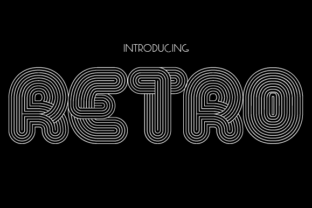
In a world saturated with minimalist sans-serif fonts and endlessly similar digital typefaces, standing out visually has become a genuine challenge. Every brand, campaign, and personal project vies for a moment of attention. Retro Free, created by Cyprus-based typographer Andreas Leonidou, arrives as a refreshing answer to that challenge. This is not just another font—it is a display typeface built to command attention, with a distinct personality that carries both warmth and authority.
What makes Retro Free immediately relevant is its versatility. It arrives in five distinct weights: Retro Regular, Retro Black, Retro Bold, Retro Light, and Retro Thin. This range allows designers, entrepreneurs, and content creators to move fluidly between subtle and bold expressions without switching type families. Whether you're crafting a logo, a poster, a social media graphic, or a website headline, the weight options give you room to experiment while keeping a cohesive brand voice.
Why a Display Font Matters More Than Ever
Typography is no longer a background consideration. As users scroll through thousands of visual messages daily, the typeface you choose becomes a silent spokesperson for your work. Modern audiences make split-second judgments about credibility, tone, and relevance based on what they see. A well-chosen display font like Retro Free signals intentionality. It suggests that you care about how your message is received, not just what it says.
Current trends in branding and content creation reflect a shift away from safe, generic typography. Businesses and creators are increasingly turning to typefaces with character—fonts that tell a story. Retro Free fits naturally into this movement. Its retro-inspired aesthetic doesn't feel nostalgic for the sake of it; instead, it taps into a broader cultural appreciation for craft, authenticity, and visual warmth. People are drawn to designs that feel human and tactile, and this typeface delivers exactly that.
For freelancers and small business owners, investing time in typography was once considered a luxury. Now, it is a practical necessity. A distinctive typeface can differentiate a local coffee shop from its competitors, or help a freelance designer's portfolio feel curated and professional. Retro Free offers that edge without requiring a deep design budget. Because it is free to download, it lowers the barrier for anyone who wants to elevate their visual identity.
The Evolution of Display Typefaces and Changing Habits
Display typefaces have evolved significantly over the past decade. Earlier, they were often reserved for print applications—posters, billboards, magazine covers. Digital design was dominated by web-safe fonts that prioritized legibility on small screens. Today, with high-resolution displays everywhere and design tools accessible to non-professionals, display fonts have migrated into everyday use. They appear in email headers, social media stories, landing pages, and even in video titles.
This shift reflects a larger change in how we consume information. Attention spans are shorter, but visual literacy is higher. People recognize quality typography even if they can't name why it works. Retro Free capitalizes on this trend by providing a typeface that is legible at display sizes yet rich in personality. It doesn't fade into the background. It asks to be looked at.
Andreas Leonidou, the designer behind the font, brings a European sensibility to the project. Based in Cyprus, his perspective is shaped by both Mediterranean and global design currents. This cross-cultural influence shows in the typeface's balance of structure and playfulness. The letterforms are sturdy without being rigid, and the curves feel organic. It is a typeface that respects tradition but isn't bound by it.
Practical Implications for Creators and Professionals
Understanding the practical applications of Retro Free is essential for anyone serious about design. Below are key areas where this typeface can make a measurable difference.
Branding and Identity
A brand's identity often hinges on a few core elements: color, imagery, and type. Retro Free works particularly well in logos, business cards, and signage. The heavier weights—Retro Black and Retro Bold—create a sense of solidity and confidence. They work well for brands that want to project reliability and charm. Lighter weights like Retro Thin and Retro Light are better suited for elegant, understated applications such as luxury labels or boutique packaging.
Content Marketing and Social Media
Scrolling through social media, the difference between a post that stops the thumb and one that gets skipped often comes down to visual hierarchy. Retro Free excels in short, punchy headlines. Its distinct style adds character to quote cards, announcement graphics, and promotional banners. Marketers can use the weight variations to create contrast: pair Retro Black for the main message with Retro Light for supporting text. This creates a dynamic layout that feels designed, not just assembled.
Web and Interface Design
While display fonts are not typically used for body text, Retro Free can be integrated into web design through hero sections, navigational highlights, and call-to-action buttons. Because the typeface has five weights, designers can maintain consistency across headers and key elements while using a more neutral font for paragraphs. This hybrid approach keeps the site visually memorable without sacrificing readability.
Print and Editorial Projects
Posters, flyers, zines, and small-run publications benefit immediately from a typeface that doesn't disappear at a distance. Retro Free was designed with print in mind. Its forms hold up well at large sizes, and the thicker weights create strong visual anchors on a page. For educators preparing classroom materials or hobbyists creating event flyers, this font offers professional results without expensive licensing fees.
Realistic Recommendations for Getting Started
Downloading Retro Free is straightforward, but using it effectively requires some thoughtful planning. Here are grounded recommendations based on real-world use.
- Start with one weight. Before mixing all five, pick the weight that best matches your current project. Retro Bold is a safe starting point for most applications because it balances presence and readability.
- Pair it wisely. Because Retro Free has a strong personality, pair it with a neutral sans-serif or a clean serif for body text. Avoid pairing it with another highly decorative font, as the result can feel chaotic.
- Use contrast intentionally. Combine Retro Black with Retro Thin in the same layout to create visual tension. The contrast draws the eye and establishes clear hierarchy.
- Test at different sizes. What looks striking on a 24-inch monitor may feel overwhelming on a mobile screen. Always preview headlines in the smallest size they will appear before finalizing.
- Respect the style. This typeface naturally leans toward a retro aesthetic. If your brand or project is ultra-modern and cold, Retro Free might feel out of place. Conversely, it shines in contexts that welcome warmth, nostalgia, or craftsmanship.
Why People Are Paying More Attention to Typography
Several converging factors explain why typography has become a priority for non-designers. First, tools like Canva, Figma, and Adobe Express have democratized design. Anyone can create a visual asset, but many quickly realize that choosing the right font separates amateur from professional results. Second, brand consistency now extends beyond logos into every customer touchpoint. A coherent typographic system signals reliability. Third, in a digital environment where ads and content compete for milliseconds of attention, type is a differentiator.
Retro Free addresses all of these factors. It gives the user a ready-made system—five fonts in one download—that can be applied across multiple projects. This reduces decision fatigue and speeds up the design process. For entrepreneurs juggling many responsibilities, having a reliable, high-quality typeface available at no cost is a practical advantage.
Andreas Leonidou's work fits into a broader recognition that independent type designers are producing some of the most innovative typefaces today. Large foundries still dominate, but creators like Leonidou offer unique perspectives that are not shaped by mass-market demands. Their typefaces carry individual voice, and that voice translates into more authentic visual communication for end users.
Observations on Design Culture and the Role of Free Resources
The availability of free, high-quality design resources has changed the landscape for creators. Previously, professional typography was a significant expense. Small businesses and independent creators often had to settle for generic system fonts. Retro Free represents a broader movement toward accessible design without compromising quality. It is a reminder that good design is not only about budget but also about intention and taste.
However, it would be unfair to treat every free font as equal. What sets Retro Free apart is the attention to detail across all five weights. Each weight feels like part of a unified family, not an afterthought. The letters maintain consistent proportions, and the character spacing is well-calibrated. This level of polish is not always present in free typefaces. For users who expect professional results, this reliability matters.
For bloggers and content creators, adopting a distinctive typeface like Retro Free can also reinforce audience perception. If your content consistently uses a unique, well-designed display font, readers begin to associate that visual signature with your work. Over time, this builds recognition and trust. It is a subtle but effective branding strategy that doesn't require a full rebrand.
A Typeface Built for the Way We Work Now
Modern workflows are multi-platform. A single piece of content may appear on Instagram, a website, an email newsletter, and a printed handout. Finding a typeface that works across these environments without losing its character is rare. Retro Free manages this balance effectively. Its forms are clear enough for digital screens and expressive enough for print.
The five-weight system also aligns with how designers think today. Rather than searching for a different font for every application, they can stay within one family and use weight to signal importance. This is efficient, and it creates a more cohesive visual language. For agencies and freelancers juggling multiple clients, this efficiency translates directly into faster turnaround times and fewer design revisions.
There is also a growing preference among consumers for brands that feel authentic and approachable. The retro character of this typeface evokes a sense of familiarity without feeling outdated. It can be used to soften a brand's image or to add a layer of warmth to a tech-focused product. The key is using it deliberately, not as a shortcut to personality.
Final Thoughts on Using Retro Free
Retro Free is a genuinely useful tool for anyone involved in visual communication. Andreas Leonidou has crafted a typeface that is both distinctive and practical. With five weights, it offers flexibility that many premium fonts require purchasing separately. The fact that it is free to download makes it accessible to students, small business owners, and seasoned professionals alike.
Typography decisions may seem small in the broader scope of a project, but they carry outsized influence. A font like Retro Free does more than display letters—it sets a tone, establishes a mood, and tells your audience that you pay attention to details. In a crowded visual landscape, that kind of attention is exactly what helps work stand out.